New: Lake House Group Learning Hub — Explore practical AI ecommerce resources

Agentic Commerce

Your Shopify Partner for
the Age of Agentic Commerce.

AI agents are about to change how ecommerce operates. Lake House Group integrates with your team to build the foundation — structured systems, intelligent automation, and human oversight that turns large catalogs and complex operations into a machine that continuously improves.

Built for Large Catalogs
AI-Powered Operations
Human-Supervised Automation

Growth, AI and complexity: the new challenges of Shopify ecommerce

The Shopify Challenges Slowing Down Growth

Complexity builds fast as a business grows, and certain challenges come up time and again: performance, operations, omnichannel, expansion, and automation. Lake House Group steps in as a partner alongside your teams to structure these initiatives and accelerate the evolution of your Shopify ecosystem — toward agentic commerce.

Our Approach

A Shopify and Klaviyo Approach Designed to Evolve Ecommerce as Complexity Grows

Lake House Group’s approach is built on a long-term partnership, supported by a capacity for continuous innovation. By working closely with your teams, Lake House Group integrates into your operations and develops a deep understanding of your challenges, goals, and constraints. This proximity enables the ecommerce ecosystem to evolve cohesively — without multiplying isolated initiatives.

01

Solid Foundations

Structuring and modernizing the Shopify, Shopify Plus, POS, and Klaviyo environment to build a reliable, scalable base — ready for agentic commerce.

02

Intelligent Automation

Connecting systems, automating critical workflows, and simplifying marketing and ecommerce operations to increase execution speed while reducing operational friction.

03

Continuous Evolution

Long-term involvement enables systems to evolve progressively, the tech stack to be adjusted, and new AI capabilities to be integrated at the pace of business growth.

This work is supported by a proprietary technology platform developed in-house, which evolves alongside client engagements. Each implementation informs the next, delivering increasing value over time.

By combining human expertise with adaptive technology, Lake House Group helps Shopify brands move forward continuously — even as commerce and AI evolve rapidly.

Ecommerce Industries We Support on Shopify

Sectors where acceleration starts with structure

We work with Shopify brands facing real operational complexity challenges.

Beauty

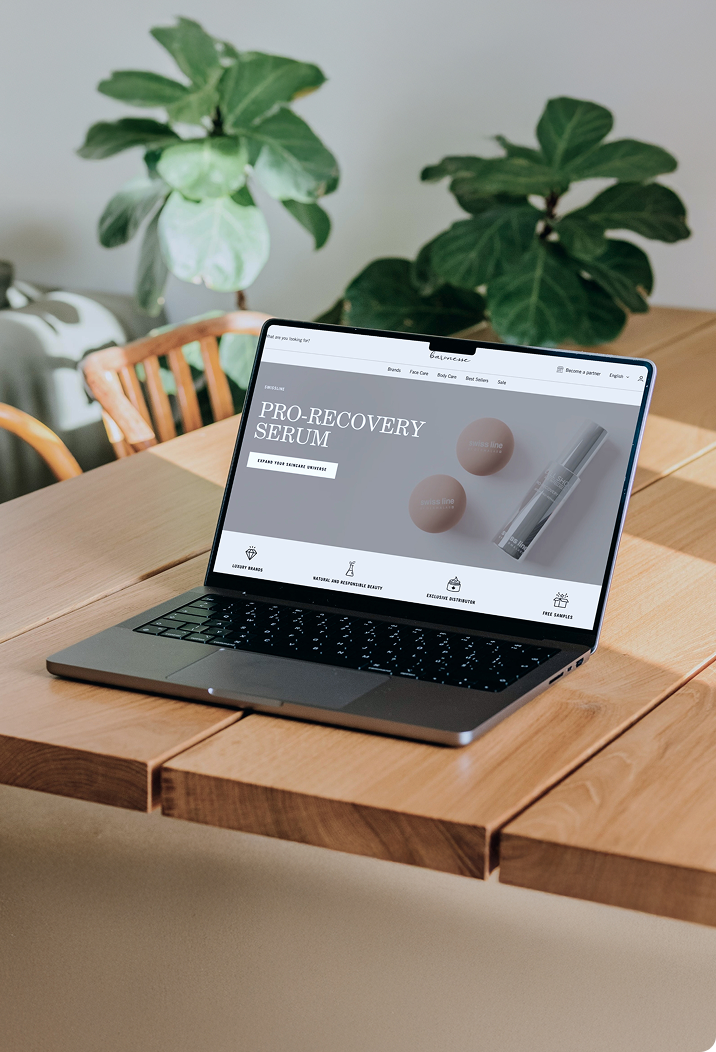
Recurring purchases and retention, advanced segmentation in Shopify and Klaviyo, personalization, and omnichannel marketing automation to support growth and efficiency.

Learn more about our Shopify projects in Beauty

Fashion

Frequent collections, multiple variants, promotions, and marketing performance — with ecommerce operations that can keep pace (catalog, data, inventory, fulfillment).

Learn more about our Shopify projects in Fashion

Home Décor & Furniture

Large catalogs, more complex logistics, Shopify POS integration, and stock and inventory synchronization for a more stable and profitable omnichannel ecommerce.

Learn more about our Shopify projects in Home, Décor & Furniture

Marketplaces

Multi-vendor, more advanced Shopify architecture, workflow automation (products, orders, inventory), and data governance to maintain a consistent customer experience at scale.

Learn more about our Shopify projects in Marketplaces

Other Sectors

Other contexts can be a great fit — especially when growth brings challenges around structure, automation, data, and integrations with Shopify, Shopify Plus, Shopify POS, and Klaviyo. What matters most: a willingness to build for the long term, in partnership with the teams.

Discuss your context

A Proprietary Platform That Powers Acceleration

platform.sh
$lh init
platform ready

The work is supported by a proprietary technology platform developed in-house, which turns ecommerce automation into a lasting advantage and concretely prepares the adoption of ecommerce AI.

It eliminates a large portion of the repetitive tasks that slow teams down, strengthens day-to-day execution reliability, and frees up time for what truly creates value — optimizing operations, improving customer experience, and driving better performance.

result

Less operational friction, better-informed decisions, and an ecommerce operation that continuously improves — with stronger returns over time.

Why Lake House Group

Brands choose Lake House Group to accelerate the evolution of their Shopify ecommerce

While maintaining a structured, stable, and sustainable approach.

A clear roadmap, well-defined priorities, and improvements that build on each other cohesively — without creating parallel workstreams or adding complexity to the ecosystem.

A partnership that integrates into the organization and strengthens internal capabilities — without adding operational weight or increasing coordination overhead.

Reliable automations, solid architecture, and disciplined execution that protect what’s already in place — moving faster without destabilizing operations.

When growth brings more channels, more data, and more constraints, the support remains constant. The goal: continue to improve, adjust, and optimize at the pace of the business and technological change.

Contact us

Contact us

For Shopify brands looking to accelerate their ecommerce within a long-term partnership framework.

Operating context

How Lake House Group works with commerce teams

The role of this page

the Lake House Group homepage is meant to give useful context before a commercial or operational conversation. It does not replace a diagnostic, but it helps Shopify brands that need a serious partner for growth, operations, automation, and long-term technical decisions understand how we connect business goals, customer experience, the Shopify platform, marketing data, and execution constraints. The right decision is not only to launch a new page, automation, or campaign. The right decision is to identify which part of the ecommerce system is blocking growth and which change will create measurable progress without adding unnecessary complexity.

Our starting point

We start by clarifying how the business currently works: catalog structure, sales channels, customer segmentation, campaigns, inventory, internal team, tools, available data, and technical debt. That context changes the solution. Two brands can show the same public symptom, such as low conversion or low average order value, while having completely different causes. One brand can have a navigation problem, another an offer problem, another an email cadence problem, and another an operational bottleneck that slows execution.

What we protect

The work has to stay useful after launch. We prioritize structures the team can understand, maintain, and improve. That means reusable components, clean Shopify architecture, readable Klaviyo rules, dashboards that answer real questions, and automations that reduce workload instead of creating another fragile system. When AI is involved, it has to support a concrete decision or workflow. It should not sit on top of an unclear process and make the process look more advanced than it is.

How we judge quality

A strong ecommerce delivery is judged by several signals at once: execution speed, stability, user clarity, team autonomy, data quality, commercial performance, and capacity to learn. An interface can be attractive and still hard to operate. An automation can look impressive and still be impossible to control. A campaign can be well written and still poorly segmented. Our role is to connect these dimensions so the work holds up inside the daily reality of a commerce brand.

Why partnership matters

The brands we help rarely need one isolated task. They need a partner that can see dependencies between the site, email, operations, data, products, and internal priorities. A theme change can affect product discoverability. A new segment can affect campaigns, flows, and performance reporting. An AI workflow can require cleaner data before it produces a reliable result. The partnership keeps those links visible and prevents teams from solving one problem while creating another.

What to prepare

The best early conversations come with a few practical inputs: business goals, current friction points, examples of pages or journeys that feel weak, tools already in place, internal constraints, seasonal pressure, current metrics, and decisions that have stayed unresolved for too long. We do not need a perfect brief. We need honest context that helps separate real blockers from surface requests.

The logical next step

When the fit is right, we turn that context into concrete priorities: what should be fixed quickly, what deserves a structured project, what needs measurement before a decision, and what should be left alone. That discipline protects budget and attention. It also creates a plan that moves by evidence, not only by opinion or whatever trend is loudest at the moment.

Why we start with the full system

A growing Shopify brand does not only run into website problems. It runs into coordination problems across catalog, collections, campaigns, inventory, promotions, reporting, internal requests, and customer expectations. Lake House Group's role is to read that full system before recommending a workstream. That avoids treating the visible symptom while leaving the operational cause untouched. A redesign, automation, or Klaviyo strategy has to improve how the business operates, not only produce an isolated delivery.

How we connect strategy to execution

Ecommerce strategy becomes useful only when it turns into concrete choices: which pages to prioritize, which products to surface, which segments to activate, which rules to automate, which data to monitor, and which tradeoffs to accept. We work with teams to close the gap between ideas and delivery. That often means translating a broad ambition into a practical roadmap with design, development, content, email, AI, and operations decisions that can be tested and maintained.

What AI changes in commerce

AI becomes useful when it improves an existing workflow: product classification, performance analysis, task prioritization, content preparation, customer service support, information synthesis, or automation of recurring processes. It is not a magic layer added at the end of a project. It requires clean data, clear rules, human control, and an understanding of the business model. That is why our AI work stays connected to Shopify, Klaviyo, operations, and the daily decisions of commerce teams.

What we expect from a strong mandate

A strong mandate gives access to real context: growth goals, team constraints, customer friction, catalog structure, technical limits, available data, and decisions already made. The clearer that context is, the sharper the plan becomes. We prefer an honest conversation about real blockers over a brief filled with preselected solutions. That lets us recommend what should be done, what should be measured, and what does not deserve investment yet.

How we avoid unnecessary complexity

Modern commerce can push teams toward more tools, more dashboards, more automations, and more competing requests. Part of our job is to protect simplicity. Good architecture reduces cognitive load. Good automation removes repetitive work without making the system opaque. A good Shopify page helps the customer decide without forcing the team to work around its own theme. A good strategy keeps priorities visible even as technical possibilities multiply.

Why the work continues after launch

A launch is not the end of an ecommerce system. It is the moment when real data starts showing what works, what blocks, and what needs adjustment. We watch signals across conversion, engagement, email revenue, mobile behavior, catalog quality, and operational load. Then we prioritize the next improvements. That rhythm protects brands from one-time projects that age quickly and creates continuous progress that fits the reality of a commerce team.

How we decide what belongs on the roadmap

The roadmap is not a wish list. It is a set of operating bets ordered by impact, effort, risk, and timing. We separate urgent fixes from strategic improvements, and we separate visible website changes from behind-the-scenes work that gives the team better control. A theme cleanup, Klaviyo flow, product template, dashboard, and AI workflow can all matter, but they should not compete blindly. The right roadmap makes tradeoffs explicit so the team knows why a piece of work is next, what result it should create, and what evidence will prove whether it worked.

How we work with internal teams

Most commerce teams already have strong domain knowledge. They know their products, customers, constraints, and seasonal pressure. Our role is to combine that knowledge with outside pattern recognition and implementation depth. We bring structure to the work, but we do not replace the team's judgment. The best results happen when internal operators can explain the business reality clearly, and we can turn that reality into cleaner systems, sharper customer journeys, better data loops, and practical automation that the team can trust.

What makes the work durable

Durability comes from decisions that still make sense after the first release. The store should be easier to manage. The email program should be easier to reason about. The analytics should show the right signals without requiring manual interpretation every week. The automation should fail visibly and be simple to adjust. The brand experience should feel coherent across product pages, collections, campaigns, and service interactions. That is the standard we use when deciding whether a delivery is finished or only technically complete.

Explore the Learning Hub

Practical AI ecommerce resources, workflows, and plain-English guides from the Lake House Group team.

Explore the hub