AI Ecommerce Certification for Shopify teams Coming soon
Migrate to Shopify POS Without Disrupting Your Operations
When ecommerce and the retail network reach a certain level of maturity, the bottleneck is no longer sales—it’s the ability of systems to work together seamlessly.
Many Shopify brands still operate with a third-party POS—such as Lightspeed, Square, Vend, Clover, or Revel—partially or not at all connected to Shopify. These setups work… up to a point. The symptoms are common:
The goal is simple: unify ecommerce and retail around Shopify, without interrupting operations or creating additional technical debt. Migrating to Shopify POS builds a coherent omnichannel foundation, ready for automation and continuous evolution.
In many organizations, Shopify is already the ecommerce backbone, but in-store sales still rely on a third-party POS—often implemented before Shopify or chosen independently from the ecommerce ecosystem. This coexistence between Shopify and a third-party POS can work in the short term. As the store network, transaction volume, and customer expectations grow, it’s not Shopify that reaches its limits—it’s the hybrid architecture between Shopify and a third-party POS.
The problem when Shopify is in place but stores rely on a third-party POS
In many organizations, Shopify is already the ecommerce backbone, but in-store sales still rely on a third-party POS—often implemented before Shopify or chosen independently from the ecommerce ecosystem. This coexistence can work in the short term.
As the store network, transaction volume, and customer expectations grow, it’s not Shopify that reaches its limits—it’s the hybrid architecture. The challenges then concentrate around three critical dimensions.
Challenges concentrate around three critical dimensions:
- Inventory out of sync between Shopify and the third-party POS
- Promotions difficult to harmonize between ecommerce and stores
- Omnichannel returns and exchanges complex or partially manual
- Customer experience fragmented by channel or location
In-store teams compensate for technology gaps:
- Frequent manual adjustments related to the third-party POS
- Dependency on processes specific to each store or system
- Rigid in-store operations difficult to standardize
- Every operational exception adds complexity
The hybrid architecture creates technical debt:
- Third-party POS partially or indirectly integrated with Shopify
- Customer, sales, and inventory data fragmented across systems
- Fragile or delayed synchronizations
- Insufficient foundation for automation and AI
Signs it’s time to migrate to Shopify POS
If you recognize yourself in these situations, your current architecture is likely reaching its limits:
A Shopify POS migration adapted to your reality
We work with Shopify brands whose omnichannel, operational, and organizational realities are very different. Priorities vary by sector, transaction volume, and team maturity.





Performance relies on loyalty, experience consistency, and customer knowledge. When a third-party POS is used in-store, customer data and purchase histories remain fragmented. Migrating to Shopify POS unifies profiles, purchases, and promotions to support a smooth, scalable experience without burdening operations.
The Lake House Group approach
Lake House Group helps teams migrate to Shopify POS without turning the transition into a risky project, following three structural steps.
Foundation
We analyze the existing environment and prepare the migration:
- Audit of existing POS and actual flows
- Mapping of product, customer, and inventory data
- Preparing Shopify POS for a progressive transition
- Solid foundations for automation and AI
Migration
We deploy Shopify POS progressively:
- Shopify POS configuration adapted to operations
- Synchronization of critical data
- Test scenarios aligned with field reality
- Reduction of manual interventions
Evolution
After migration, we optimize the unified ecosystem:
- Continuous workflow improvement
- Clear governance of store operations
- Progressive activation of automation and AI
- Long-term partnership
What you get concretely
Frequently asked questions
Everything you need to know about this service
To unify ecommerce and stores, strengthen data reliability, and simplify omnichannel.
Yes. The approach aims for a progressive, tested, and secured transition.
Yes, when properly structured and integrated with Shopify.
Yes. We act as an extension of your teams, with a goal of autonomy over time.
Tailored Success Stories
Curated by the specific service featured on this page, these case studies drive real results—giving you relevant, service-focused successes at a glance.
View all projects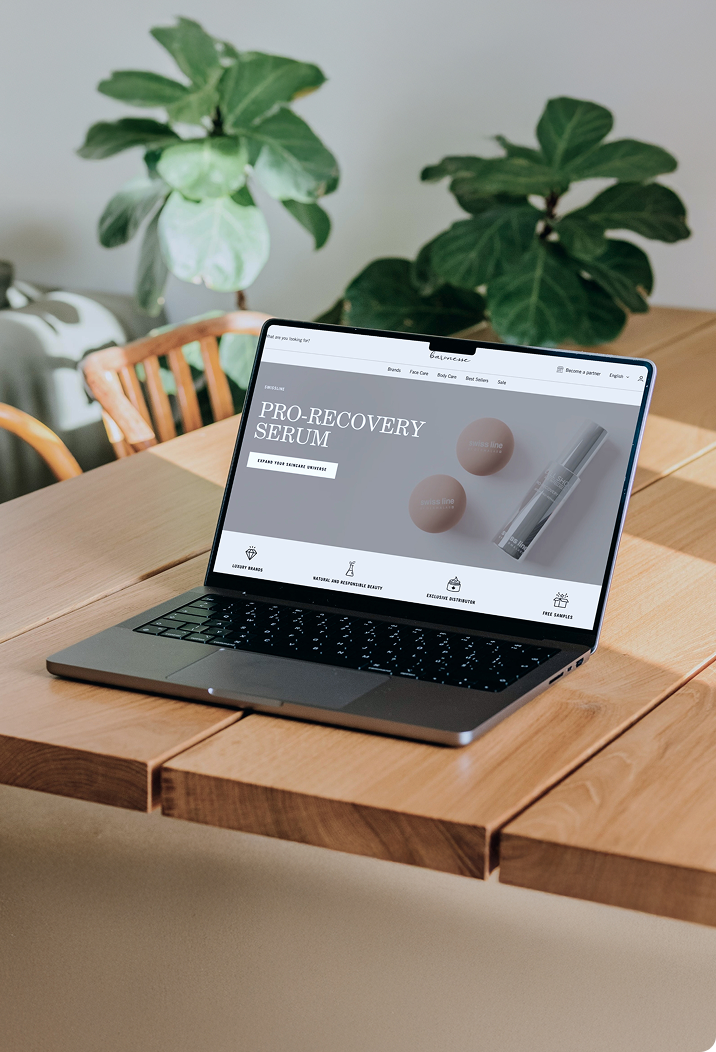
From Showcase to Sales: Baronesse’s Transformation into a Scalable E-Commerce Experience
How Lake House Group helped Baronesse transition from a basic showcase site to a high-performing, scalable Shopify e-commerce platform.
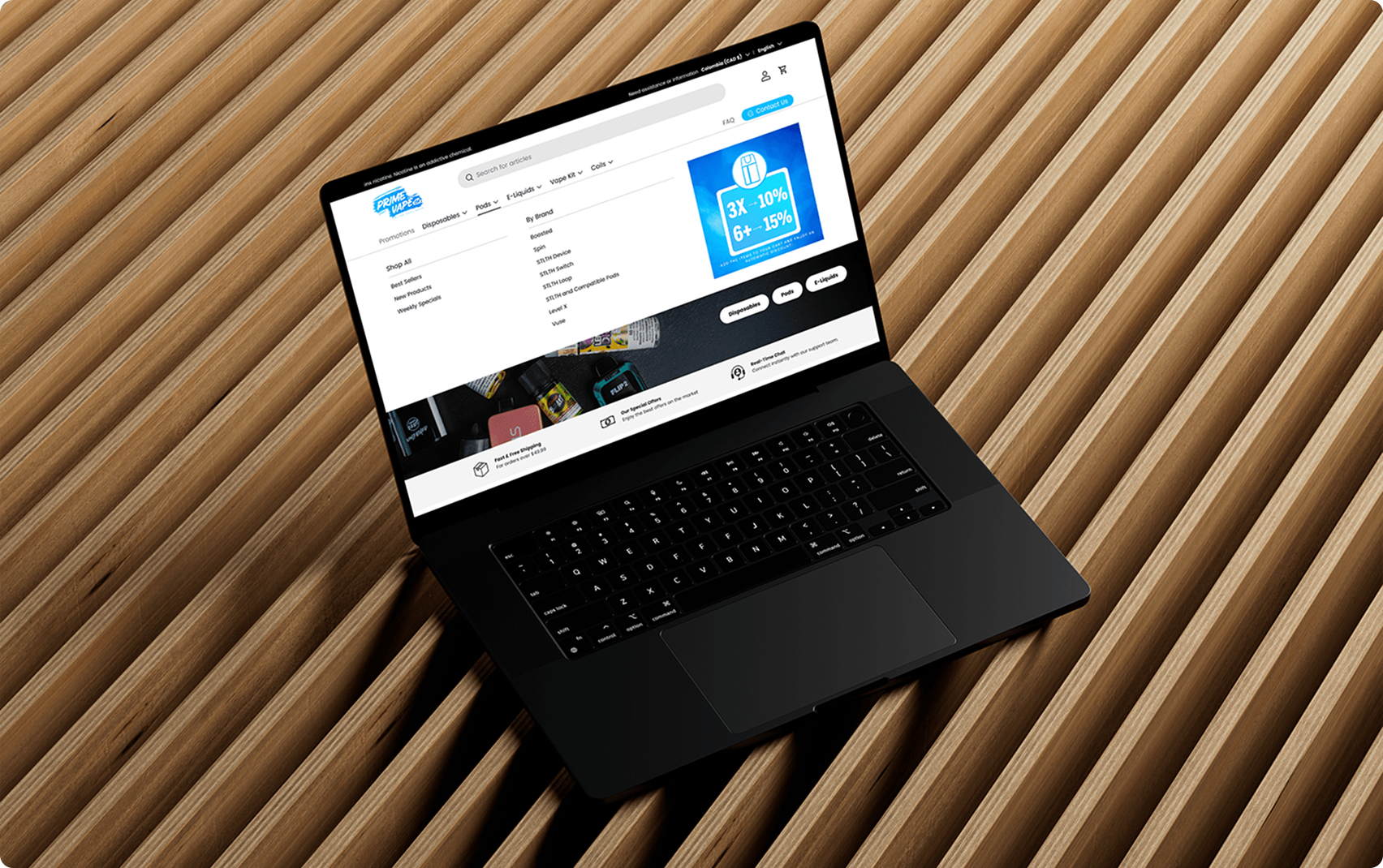
Full Shopify revamp for BFCM
How Lake House Group delivered a complete Shopify store transformation in one month, driving +23% AOV and +15% conversion rate for BFCM 2024.
Ready to migrate to Shopify POS without unnecessary complexity?
Lake House Group supports Shopify brands in migrating from a third-party POS to Shopify POS, progressively and structurally. The goal is not to disrupt what exists, but to simplify the ecosystem, unify ecommerce and stores, and evolve omnichannel on clearer, more sustainable foundations.
For growing Shopify brands looking to migrate from a third-party POS to Shopify POS to build reliable, scalable, and lasting omnichannel operations.